PulmoVision
Explainable AI for pulmonary edema detection in chest X-rays
Highlights
Radiologists at Beth Israel Deaconess Medical Center lacked an AI tool to reliably detect pulmonary edema in chest X-rays, making diagnosis time-consuming and subjective.
Design and implement segmentation and object detection models to automatically identify and localize edema-related radiographic features.
Built an ensemble of eight detection networks with a robust annotation pipeline; optimized inference for real-time deployment using lung segmentation preprocessing.
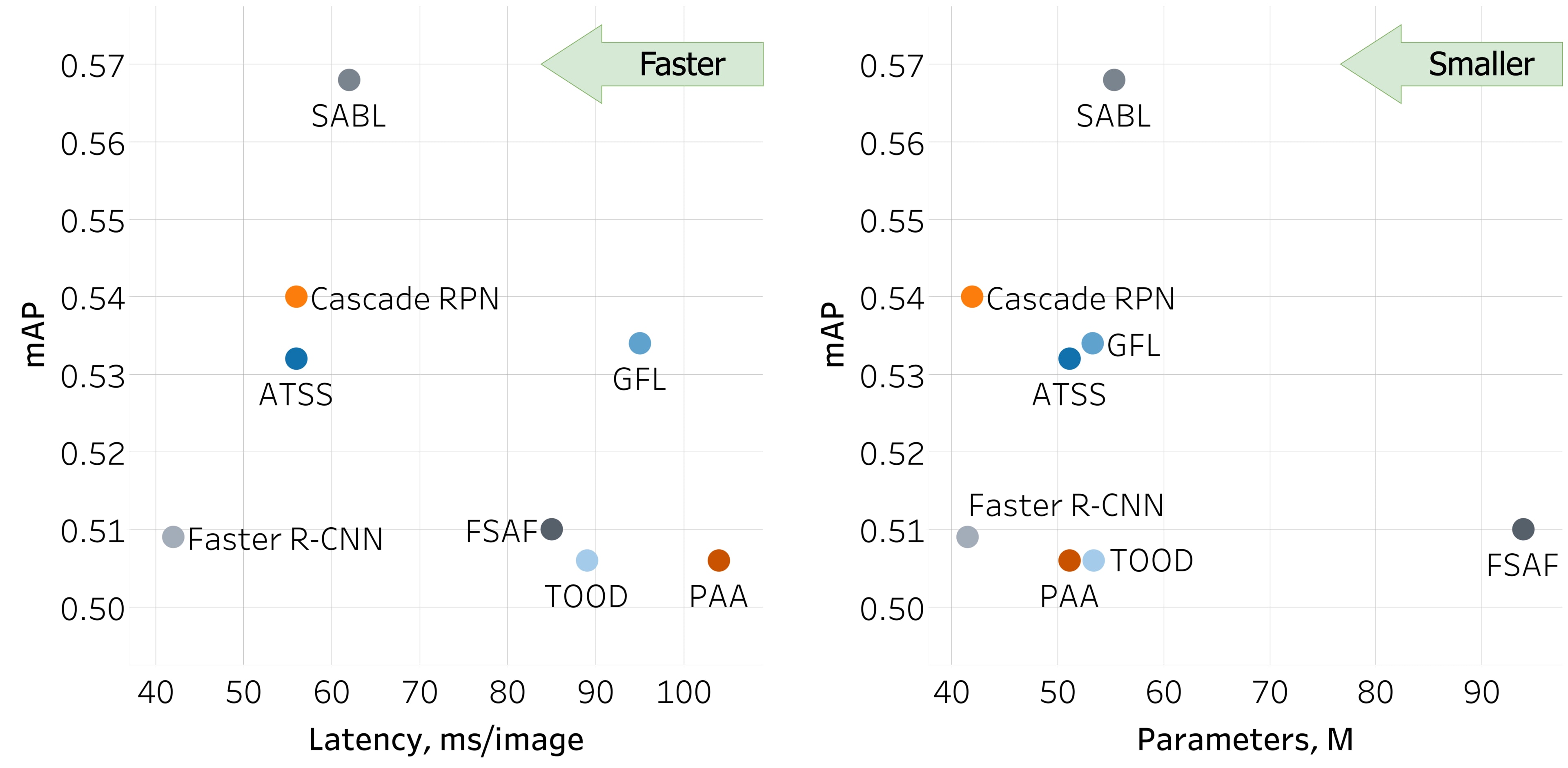
Achieved mAP of 0.568 with SABL network, enabling real-time clinical support and streamlining radiology workflows with interpretable AI predictions.
Core Team





Overview
Pulmonary edema, a critical condition often linked to congestive heart failure, requires timely and accurate diagnosis for effective treatment planning. This project aimed to develop an explainable AI solution to assist in the identification and severity assessment of pulmonary edema using chest X-rays.
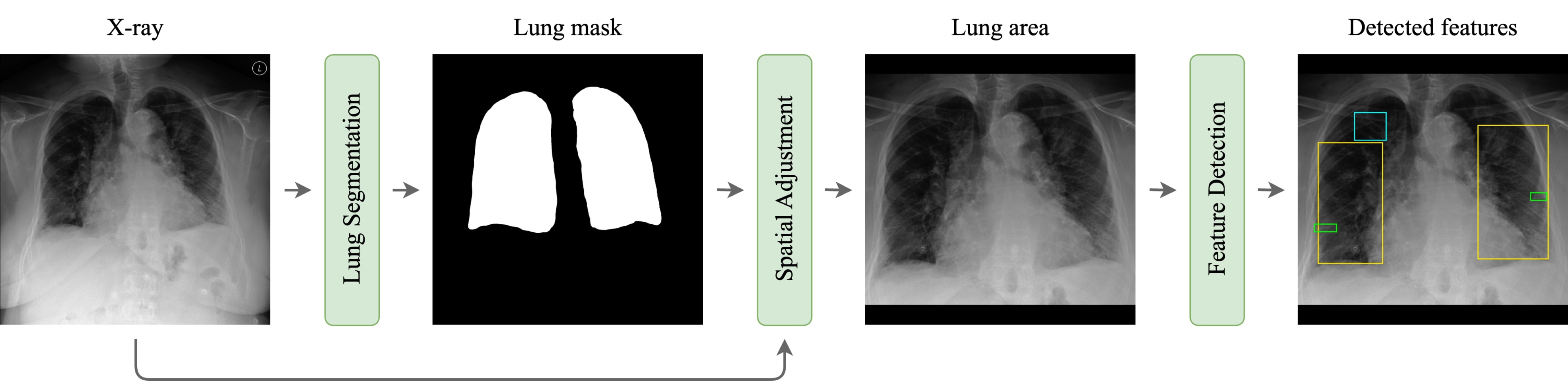
We implemented a two-stage deep learning framework: lung segmentation and edema feature localization. The segmentation stage focused on isolating lung regions, while the detection stage utilized multiple object detection networks to identify edema-related radiographic features such as cephalization, Kerley lines, pleural effusion, infiltrates, and bat wings. The methodology integrated state-of-the-art networks, achieving high precision in localizing features and providing an interpretable diagnostic aid for radiologists.
Data
This study leveraged a robust and clinically relevant dataset to ensure precise model training and evaluation:
- •Source: Chest X-rays were sourced from the Medical Information Mart for Intensive Care (MIMIC) database.
- •Dataset Size: 1,000 annotated chest X-rays representing 741 patients with suspected pulmonary edema.
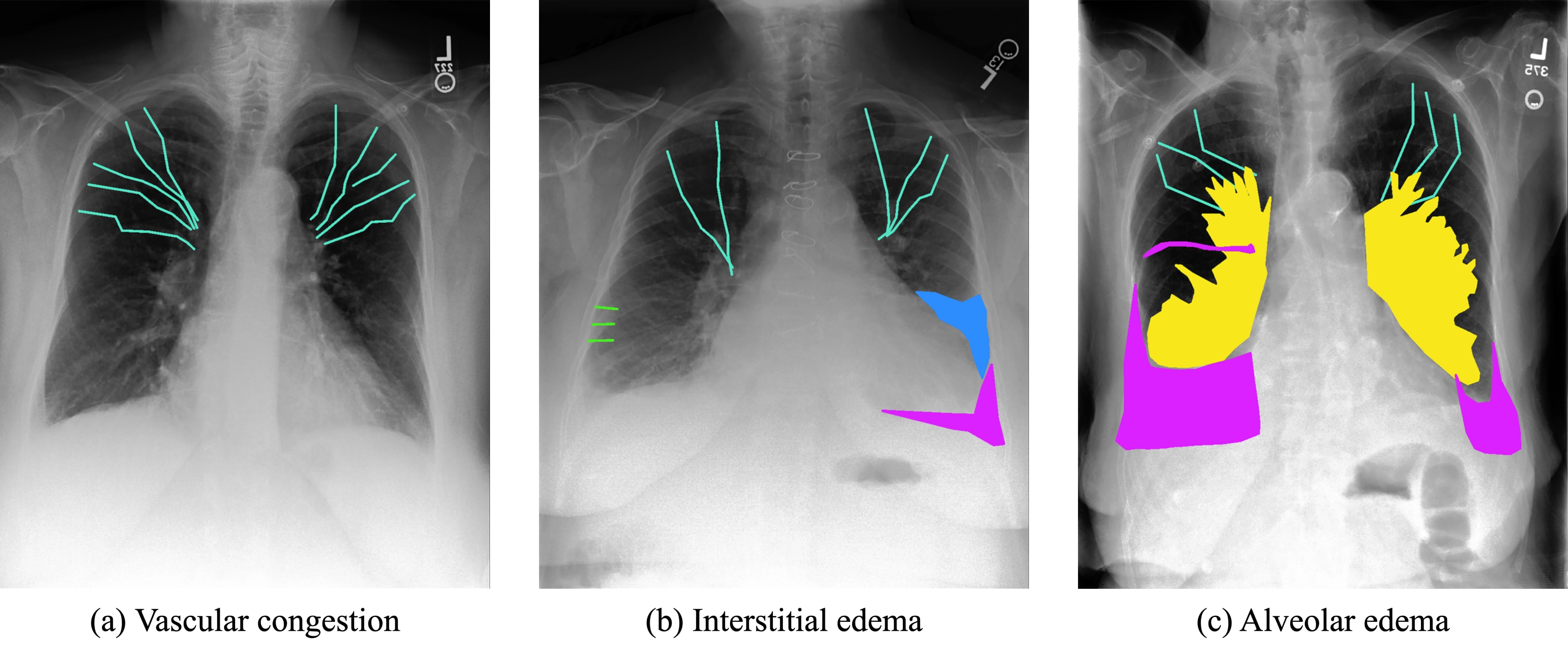
- •Features: Cephalization, Kerley lines, pleural effusion, bat wings, and infiltrates.
- •Annotation Method: Cephalization and Kerley lines were delineated using polylines; pleural effusion, bat wings, and infiltrates were marked with binary segmentation masks.
- •Annotation Platform: The Supervisely computer vision platform facilitated high-quality, consistent annotations.
Radiological features such as cephalization, Kerley lines, pleural effusion, bat wings, and infiltrates were labeled by an experienced radiologist (Figure 1).
Methods
The project implemented a comprehensive two-stage methodology tailored for the detection and localization of pulmonary edema features:
- Lung Segmentation: Combined predictions from three segmentation models (DeepLabV3, MA-Net, and FPN) in an ensemble approach. Achieved Dice Similarity Coefficients exceeding 94%, ensuring precise lung boundary delineation.
- Feature Detection: Eight object detection networks were trained to specialize in detecting individual features, including SABL, TOOD, Cascade RPN, PAA, Faster R-CNN, GFL, FSAF, and ATSS.
- Training Strategy: Each network was configured to address imbalances in feature representation, with tailored confidence thresholds to optimize F1 scores.
- Evaluation Metrics: Used average precision (AP), mean average precision (mAP), and latency to assess network performance across all feature classes.
The two-stage detection workflow is illustrated in Figure 2, showing lung segmentation followed by feature detection.
Results
The developed framework demonstrated high precision and efficiency in localizing radiographic features of pulmonary edema:
- SABL: Achieved the highest mAP of 0.568 and excelled in detecting pleural effusion (AP: 0.599), infiltrates (AP: 0.395), and bat wings (AP: 0.926).
- TOOD & Cascade RPN: Showed strong capabilities in detecting bat wings (AP: 0.918) and cephalization (AP: 0.532).
- Faster R-CNN: Delivered the shortest processing time of 42 ms per image, demonstrating suitability for high-throughput clinical workflows.
- Bat Wings Detection: All networks demonstrated exceptional accuracy with average precision scores exceeding 0.90.
The integration of segmentation and detection networks provides a scalable solution for automating radiographic assessments, with applications in real-time diagnostic workflows and severity grading systems. The network performance comparison is shown in Figure 3.
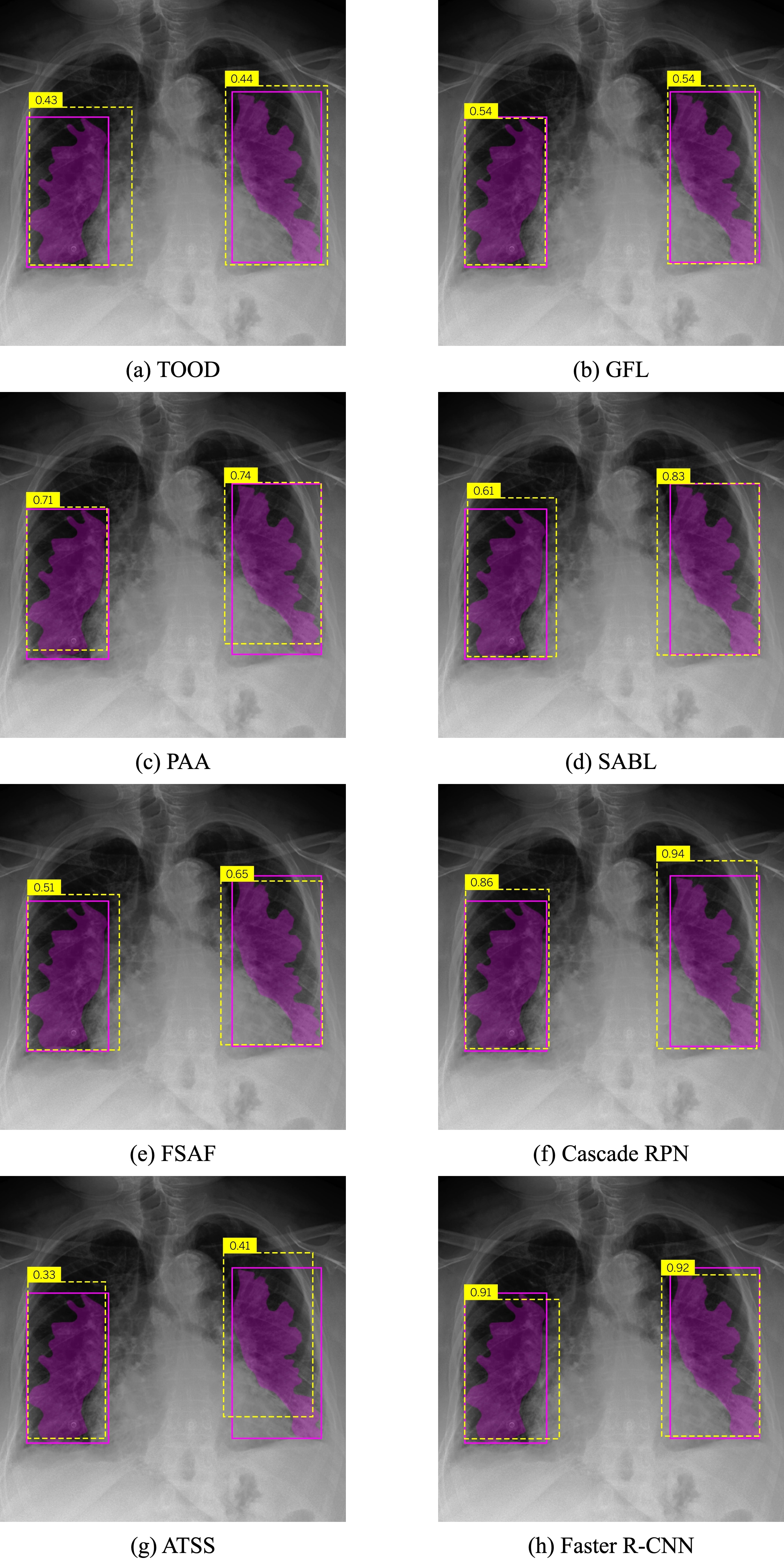
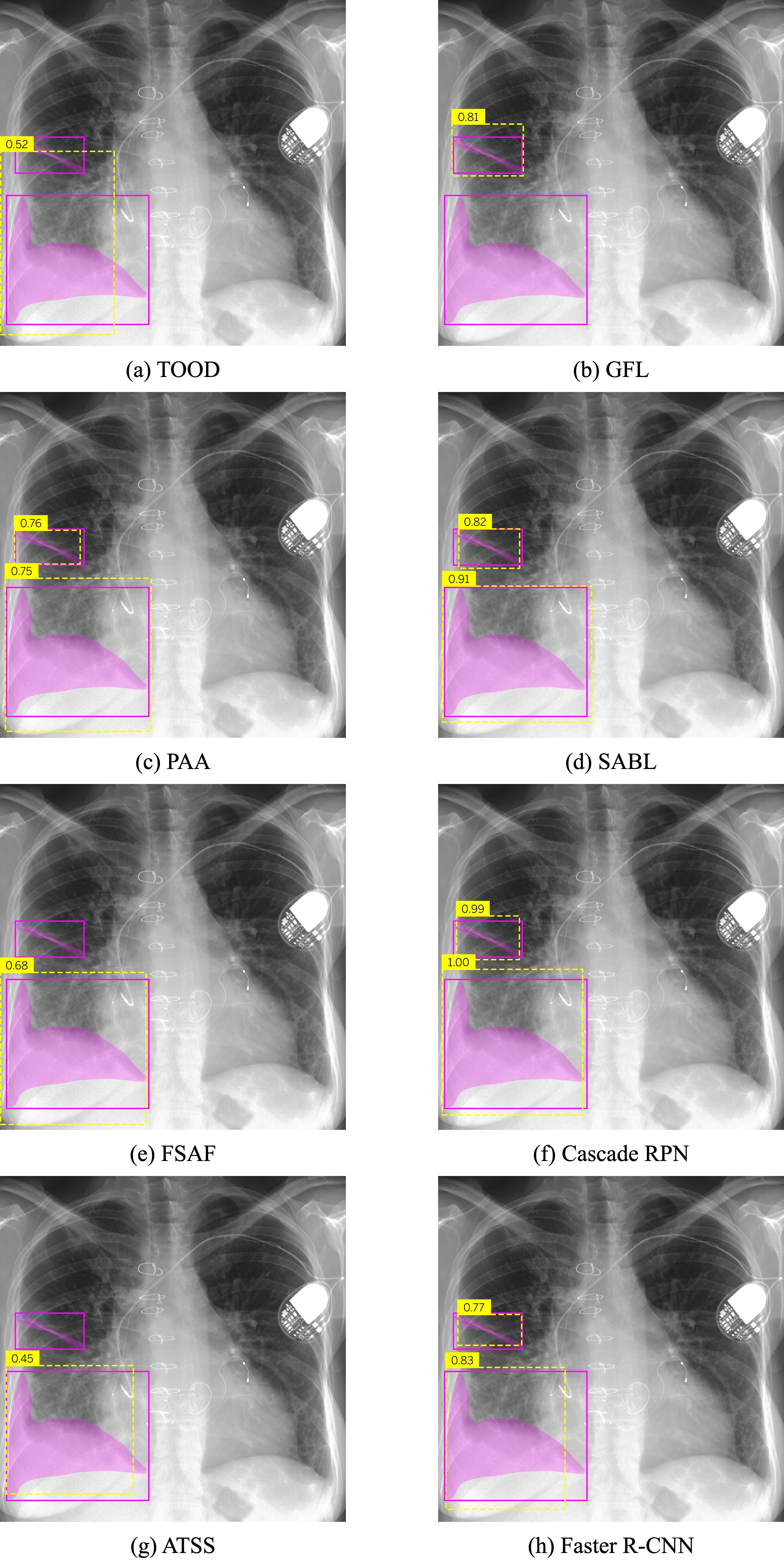
Visual assessment of network predictions for bat wings (Figure 4) and pleural effusion (Figure 5) demonstrates the model's capabilities across different radiographic features.
Conclusion
This project demonstrated the effectiveness of an explainable AI framework in accurately detecting pulmonary edema features from chest X-rays, offering enhanced diagnostic support for clinicians. The two-stage approach combining lung segmentation with specialized object detection networks achieved high precision while maintaining interpretability.
The results highlight the potential for integrating such models into clinical workflows, with future improvements focusing on severity grading, larger datasets, and real-time implementation in hospital radiology departments.